OpenClaw Isn’t a Monster. It’s an Accelerator — Remember How Cars Felt in 1926
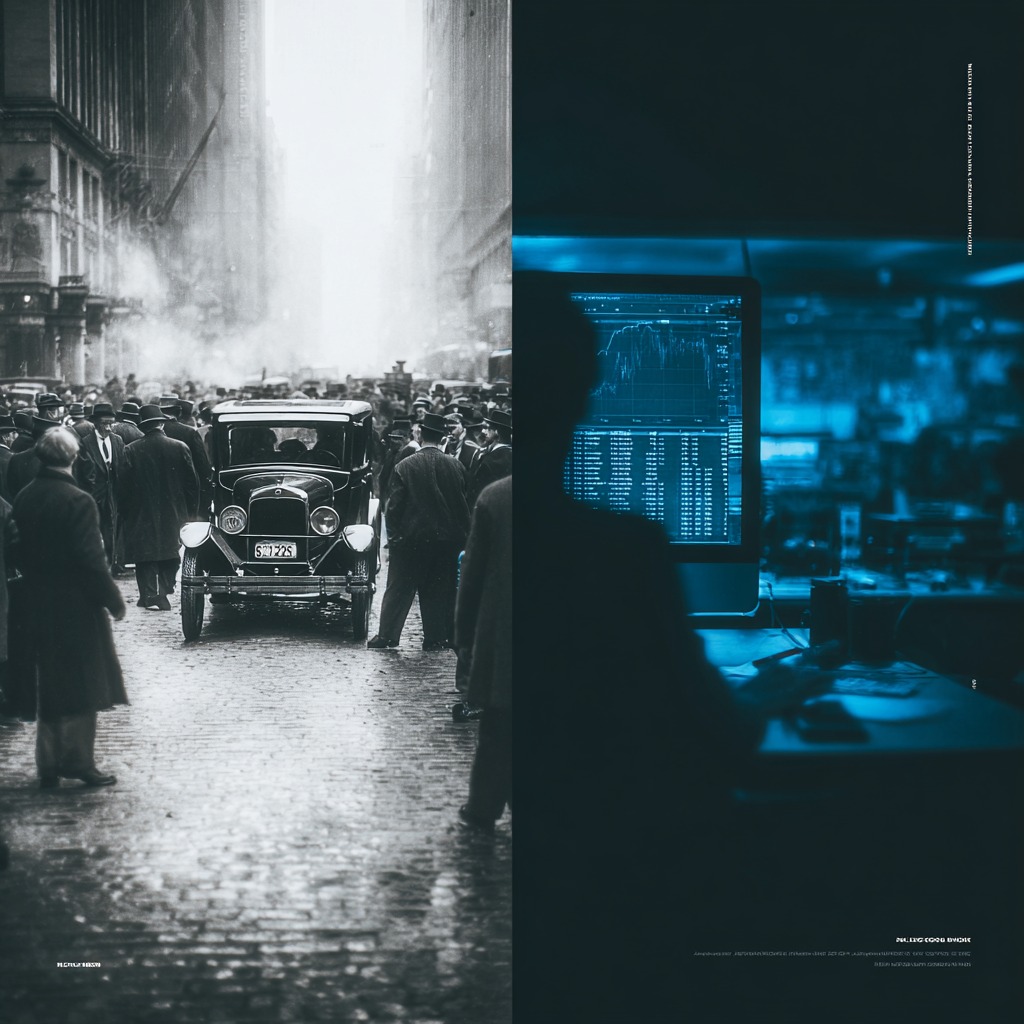
Late June, 2028. I was killing time in a used bookstore when I found a yellowed photograph tucked inside a hardback. An early car sat by the curb like a clenched jaw. People formed a half‑circle around it. Some leaned in to see better. Some kept their hands buried in their sleeves. Most wore the same mixed expression—part curiosity, part waiting-for-an-accident. On the back, in pencil: 1926.
I turned it over twice and laughed—not at the car, but at what it pulled up from memory. June, 2026. That was when we first connected OpenClaw to real permissions, real tools, the kind of access that can actually move the world. There was no crowd in the office, but the air had the same shape as that photo: a quiet arc of attention. Everyone wanted to see it run. Everyone expected it to crash. Nobody said it out loud. We didn’t have to. The cold feeling never comes from a system producing a pretty paragraph. It comes when the system starts pressing buttons, making calls, pushing reality forward by a centimeter.
Cars felt monstrous back then not because metal is evil, but because streets were still built for hooves. No traffic lights. No shared expectations. No clear speed boundaries. No clean responsibility when something went wrong. Every engine sound was a challenge to an older order. People argued about safety, about jobs, about morals. Underneath, it was simpler: loss of control. Something you barely understood was already changing how life works.
OpenClaw is landing in a similar moment. It isn’t a clever chat box. It’s closer to a transmission: intent becomes action. A sentence becomes a workflow. A goal becomes a chain of small moves. The moment you connect it to messaging, files, calendars, servers—its outputs stop being suggestions and start becoming events. Then the familiar questions arrive: Is it safe? Will it hurt people? Will it leak private things? Will it erase jobs? Will it be abused? Will it tilt advantage toward the few? Will it push society into a faster, messier version of itself?
None of those worries are embarrassing. What’s childish is the swing to mythology—either treating the agent as a savior, or treating it as a demon. History doesn’t sit on either shoulder. Cars weren’t banned, and society wasn’t destroyed. We did something plain and difficult instead: we built rules, we nailed down responsibility, we wrote boundaries into systems. We made dangerous moves costlier. We made loss of control harder to achieve.
That’s why I don’t love the supernatural tone people bring to this. OpenClaw is more like car keys. Keys don’t brake. Keys don’t design roads. Keys don’t supply judgment. Keys simply decide whether the machine can move. Where you drive, how fast you go, whether you buckle up, what happens when you hit someone—those choices decide whether the tool becomes a threat.
From that angle, OpenClaw isn’t a monster. It’s an accelerator. It turns things that used to require a team—coordination, tracking, consistent operations—into something a single person can run reliably. It shrinks the distance between “I want to do this” and “it actually gets done.” It makes the boring parts cheaper: the follow‑ups, the monitoring, the reminders, the small repeats that keep systems from decaying. And it forces a new kind of competence on us: tighten permissions, leave an audit trail, put irreversible actions behind a door that requires confirmation, make “oops” something you can trace, stop, and correct.
If you ask what’s worth fearing, I’m less worried about the agent “turning bad” than I am about us driving a new kind of speed with old habits. Handing out permissions casually. Treating automation like a toy. Outsourcing responsibility to the idea that “the system is smart.” Then an incident happens and we discover we don’t even have the evidence needed to understand it. That’s the familiar tragedy. Not technology that’s too strong, but governance that’s too lazy.
I slid the 1926 photograph back into the book. When I stepped outside, the air was slightly cold. Traffic flowed calmly, as if it had always been this way. But of course it wasn’t. Cars were once something people gathered around, feared, cursed. What we’re arguing about with OpenClaw is the same question in a new costume: a new capability has appeared. Do we domesticate it into infrastructure, or do we let it run on streets with no rules?
I pick the first path. Because the real monster isn’t the tool. It’s the refusal to build guardrails. Don’t build roads and cars will hit people. Don’t build boundaries and agents will drift. Do the hard work properly, and OpenClaw becomes ordinary—neither mystical nor terrifying—just a way for ordinary people to move a little steadier, a little farther.